
LongHorn Parmesan Crusted Chicken Recipe
A home copycat with seasoned chicken, a creamy Parmesan–provolone layer and a golden garlic-panko topping.
Jump to recipe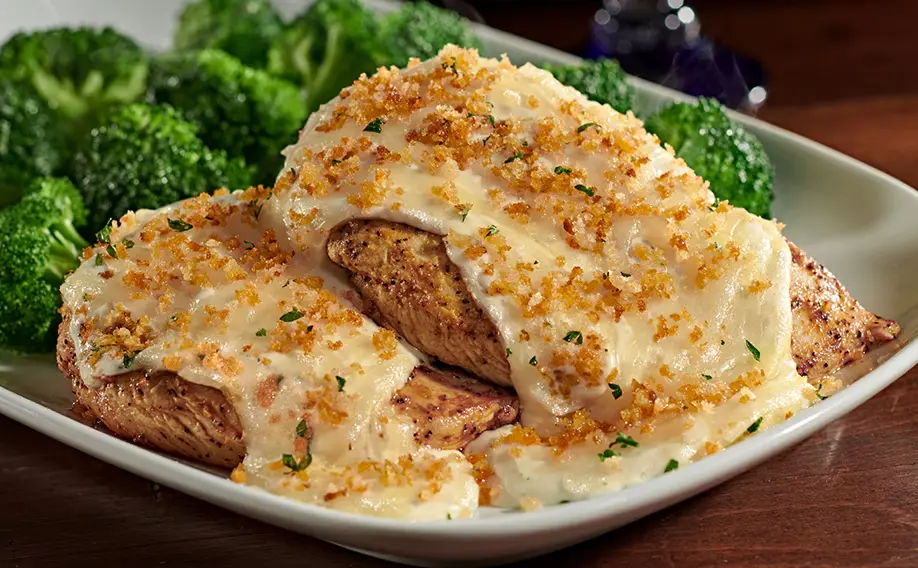
The recipe in one minute
This LongHorn Parmesan Crusted Chicken recipe is a home adaptation, not a verified restaurant formula. Marinate evenly thin chicken, cook it through, add the cheese spread, then finish with buttered panko under the broiler. The two topping layers stay separate until assembly.
Allow extra time for batches, preheating and thicker pieces. A thermometer determines doneness; the timings are estimates rather than a kitchen-tested guarantee.
For the restaurant dish’s price and portion information, use our Parmesan Crusted Chicken menu guide. For more home ideas, browse LongHorn Steakhouse copycat recipes.
Three components, three jobs
Even chicken cutlets
Use four similar pieces rather than four very different breast sizes. Thin, even thickness helps the center cook before the outside becomes excessively dark.
Cheese spread
Parmesan supplies savory flavor, provolone melts into the layer, and ranch loosens the mixture. Add it over cooked chicken rather than stirring it into all the breadcrumbs.
Garlic-panko crumbs
Butter moistens the crumbs for browning. Spread them over the cheese just before broiling so their exposed surface can toast.
LongHorn Parmesan Crusted Chicken Copycat
Yield: 4 portions · Estimated total: 1 hour 5 minutes · US cup = approximately 240 ml · tbsp = tablespoon · tsp = teaspoon
Chicken & marinade
Cheese spread
Crumb topping
Quick instructions
- Flatten cutlets to about ½ inch / 1.3 cm. Coat with Italian dressing and refrigerate at least 30 minutes.
- Drain; discard used dressing. Heat oil over medium-high heat. Sear roughly 4–5 minutes per side, reducing heat if needed. Verify 165°F / 74°C in the thickest part of each piece.
- Warm Parmesan, provolone and ranch in short microwave intervals, stirring between bursts, until spreadable. Mix panko, butter and garlic powder in a separate bowl.
- Put cooked chicken on a broiler-safe tray. Divide cheese spread among portions, then add crumbs.
- Broil on low until golden, watching continuously. About 3–4 minutes is a starting guide; your broiler may act faster. Serve promptly.
Equipment: skillet, thermometer, tongs, meat mallet, two bowls, microwave-safe bowl and broiler-safe tray. Use metal cookware rated for your broiler; avoid parchment beneath intense broiler heat.
How to make the chicken without losing the crust
1. Match the pieces before starting
Four large whole breasts are not equivalent to four cutlets. If necessary, split thick breasts horizontally with a sharp knife, then flatten thicker areas. Work on a stable board and aim for an even surface rather than pounding the edges paper-thin.
Our four portions are based on about 680 g of raw chicken in total. This helps you scale the meal; it is not a claim that a home portion matches LongHorn’s listed restaurant ounces.
2. Keep marinade and topping separate
Marinate in a covered food-safe container in the refrigerator. The ranch for the cheese layer must come from a clean container, not the chicken marinade. Drain the cutlets before cooking so dressing does not pool in the pan.
USDA advises refrigerated marinating and says used raw-poultry marinade must not become an uncooked sauce. This recipe discards it. Do not rinse raw chicken before preparing it.
3. Give the skillet room
Place cutlets in one layer with space around them. If the pan is crowded, cook two batches. Reduce heat if the outside darkens rapidly. Check each piece rather than assuming all four finish together.
Insert the thermometer from the side into the thickest part of a thin cutlet when practical. Cook to 165°F / 74°C before adding the topping; do not depend on a short browning step to finish an undercooked center.
4. Assemble only when ready to finish
Stir the warmed cheese mixture, then divide it over the cooked chicken. Spread the buttered crumbs across the top. Keep raw-chicken utensils away from the cooked tray.
Read your broiler and cookware instructions. Stay beside the oven: lightly toasted crumbs can burn quickly. Remove when the topping is golden rather than waiting for a dark brown layer.
Ingredient choices & substitutions
| Ingredient | Practical alternative | What changes |
|---|---|---|
| Provolone | Low-moisture mozzarella | Milder flavor and a different melt; avoid extra liquid from fresh mozzarella |
| Panko | Plain dry breadcrumbs | A finer, denser topping; do not expect identical crunch |
| Italian dressing | A separately chosen chicken marinade | Flavor, salt and timing can change; follow that marinade’s instructions |
| Chicken breast | Boneless thighs | Different thickness, fat and cooking time; still verify 165°F |
| Regular panko | Labeled gluten-free panko | Also check both dressings, cheese and preparation tools; one swap does not establish allergy suitability |
Use finely grated Parmesan for easy distribution. Garlic powder and garlic salt are different products. Dressings, cheese and butter may already contribute substantial salt; avoid automatically adding a full spoon of salt to the chicken.
Skillet, oven or outdoor grill?
The card above is a skillet recipe with a broiler finish. That is the primary method for this page. If your equipment differs, keep two separate goals: cook the chicken through, then brown the topping.
Oven-cooked variation
You can cook evenly thin chicken in an oven-safe dish before topping. A published baked adaptation uses 425°F / 218°C and approximately 15–18 minutes, but thickness and the dish change timing. Verify 165°F before moving to the topping stage.
Do not confuse the bake setting with broil. Check that the tray is suitable for both before transferring it.
Outdoor-grilled variation
Cook the marinated chicken on the grill to 165°F, then transfer it to a clean broiler-safe tray for the cheese and crumbs. The finishing layer needs top heat; it is not applied to raw chicken at the start.
An air-fryer conversion is not supplied here because basket space, heating intensity and topping clearance need separate timing. Do not reuse the skillet timer blindly.
Why is the topping soggy, greasy or burnt?
| Problem | Likely cause | Next adjustment |
|---|---|---|
| Soft crumbs | Crumbs mixed into wet spread, or finished chicken covered while steaming | Keep layers separate; serve soon after browning |
| Crumbs burn before cheese warms | Very strong broiler, tray too close, thick cold topping | Warm the spread first; use low broil and a suitable rack position |
| Dark outside, undercooked center | Uneven cutlets or heat too high | Lower the heat and finish cooking the center before topping |
| Dry chicken | Cooking by a fixed timer after the chicken has already reached its endpoint | Check earlier; remove cooked pieces individually |
| Oily topping | Overheated cheese mixture or more butter added than measured | Warm in short bursts and stir; measure the butter |
| Bland or overly salty result | Different dressing and cheese brands, or unadjusted extra seasoning | Check labels and taste the cooked meal before adding more salt |
Make-ahead plan, storage & reheating
Before dinner
Marinate chicken in the refrigerator. Measure crumbs separately and refrigerate the dairy spread until needed. Keep wet and dry topping components apart. For this adaptation, plan at least 30 minutes of marinating; overnight is optional.
After dinner
Place leftovers in shallow containers and refrigerate within 2 hours, or within 1 hour above 90°F / 32°C. Keep the refrigerator at 40°F / 4°C or below. Use cooked poultry leftovers within 3–4 days.
Reheat a portion
Use a 350°F / 177°C oven as a practical starting setting, then verify 165°F at the center. A brief uncovered finish can help the crumbs, but browning alone does not prove the center is hot. Microwave reheating softens the crust.
Freezing is possible, but the cheese and crumb texture may change. FoodSafety.gov lists 2–6 months as a quality range for frozen cooked meat or poultry kept at 0°F / −18°C. Thaw in the refrigerator and reheat to 165°F. This is storage guidance, not a claim that the topping stays crisp.
Homemade nutrition & cost: calculate your batch
Do not copy the restaurant calorie figure onto this recipe. Different raw chicken weights, ranch brands, cheese amounts, retained marinade and cooking oil affect the result. An exact homemade calorie or protein total has not been established for this adaptation.
A transparent nutrition estimate
- Use the actual package values for the chicken, cheese, ranch, butter, crumbs and cooking oil.
- Add the amounts used for the batch.
- Record your marinade-retention assumption instead of silently counting all or none of it.
- Divide by four if you serve four equal portions. Add sides separately.
If precise intake matters, weigh the ingredients. A restaurant’s 9 oz label does not establish the raw weight or nutrient content of one home cutlet.
A realistic price per portion
Add the ingredient cost actually used, then divide by the portions served. Distinguish that figure from the checkout cost of buying full bottles, cheese packs and a bag of panko.
We have not verified your grocery prices or a national restaurant saving. The restaurant nutrition calculator is for menu items, not a calculator for this homemade batch.
Serving ideas
Pair with steamed broccoli, a simple salad or mashed potatoes. Choose a side you can finish before broiling so the topping reaches the table promptly. For more menu inspiration, explore LongHorn sides.
LongHorn Parmesan Crusted Chicken recipe FAQs
Is this the official LongHorn recipe?
No. This is an attributed home adaptation of published copycat techniques. LongHorn’s menu confirms the dish’s general description, but it does not verify the full ingredient quantities or home equipment method used here.
Is it the same as chicken Parmesan?
No. This version uses a creamy cheese layer and garlic crumbs over cooked chicken. It does not include tomato sauce or a full flour-and-egg breading process.
What cheese should I use?
The home version combines Parmesan and provolone. Low-moisture mozzarella is a possible substitution, with a milder flavor and different melt. This does not establish the exact proprietary restaurant cheese blend.
Can I make it without marinating?
You can choose a no-marinade recipe, but it changes the flavor and timing. The card on this page includes at least 30 minutes of refrigerated marinating; its estimated 65-minute total includes that time.
Can I put the topping on raw chicken?
Follow the staged method here: cook the chicken to 165°F, then add and brown the topping. A short broil can toast crumbs before a raw center finishes cooking.
Can I double the recipe?
Double ingredient quantities for eight equal portions, but cook in batches or use enough cooking space. Do not double the broiler time. Each cutlet still needs a temperature check and the topping still needs close attention.
Can I make it gluten-free or keto?
Labeled gluten-free panko is one possible home substitution; also check dressings and other ingredients. Removing panko creates a different texture and does not establish exact carbs. For restaurant orders, use the gluten-sensitive guide or keto ordering guide.
How do I keep the crust crisp for meal prep?
Expect the topping to soften during chilled storage. Keep wet and dry components separate before the initial cook, and use an oven to reheat cooked portions to 165°F. Do not promise fresh-broiled texture after storage.
Sources & recipe development notes
Researched November 15, 2026. This is a research-based home adaptation, not a documented kitchen test or a claimed taste-identical restaurant formula. No review score, invented chef endorsement or unmeasured homemade nutrition figure is used.
- The Cozy Cook, Stephanie: shortcut marinade, topping quantities and published home-method reference.
- Mom On Timeout, Trish: alternative butter-and-cheese approach, ingredient and texture comparison.
- The Country Cook, Brandie Skibinski: another independently published copycat and substitution comparison.
- LongHorn official menu description: restaurant dish identity; not a source of home ingredient ratios or current local prices.
- FoodSafety.gov cooking temperatures, cold storage chart and handling guidance.
- USDA FSIS: marinating poultry, washing poultry and partial cooking.
Independent recipe guide. Not affiliated with LongHorn Steakhouse or Darden Restaurants. Restaurant dish information and homemade recipe estimates serve different purposes.