LongHorn Steak Doneness Guide: Rare to Well-Done
Medium-rare describes a red, warmed center; medium describes a pink, warmed center. Medium-well leaves a little pink, while well-done describes no pink. Pair the doneness name with the center you want when speaking with your server.
Independent guide · Reviewed November 16, 2026
Appearance describes a preference. It does not verify food safety.
LongHorn Steak Doneness Chart
The five descriptions below paraphrase LongHorn’s published steak guide in an official 2020 menu PDF. It is a historical wording reference, not proof of today’s kitchen temperatures. Ask your restaurant to confirm its current descriptions and available preparations.
| Doneness | Center described | Useful clarification |
|---|---|---|
| Rare | Red middle that remains relatively cool | Say whether a cool center is actually what you want. |
| Medium-rare | Red through the center, warmed, with some pink | Do not confuse a red center with the mostly pink center described for medium. |
| Medium | Pink and warm through the center | Ask about this description if you want pink rather than a red middle. |
| Medium-well | A small amount of pink remains in the middle | If you want no pink at all, explain that explicitly. |
| Well-done | No pink is intended to remain | State your preference; color alone is not a safety measurement. |
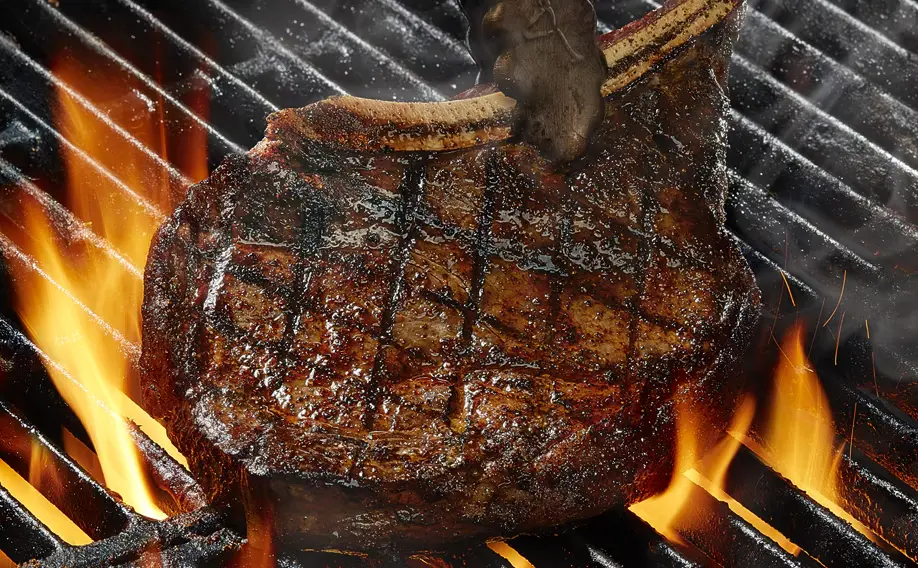
Source: LongHorn historical menu, 2020, second PDF page. Old prices and meal inclusions in that document are not used here. The hero photo shows an exterior grill scene, not a doneness sample.
LongHorn Medium-Rare vs Medium
Medium-rare
The historical menu describes a warm red middle with some pink. If you do not want red in the center, explain that before choosing this term.
Medium
The historical menu describes a warm pink middle. It is the clearer term to discuss when you want pink instead of a red-centered steak.
Medium-well
The description still allows a little pink. “Medium-well” and “no pink anywhere” communicate different preferences.
Order by the center, not just the crust. A dark exterior or grill marks cannot tell you the internal temperature. Tell your server the doneness and center you prefer, then discuss any separate request about the exterior.
How to Ask for Your Steak at LongHorn
Choose a level to see a short example you can adapt. Add the steak’s name and size when ordering. These examples help you communicate; they do not submit an order or verify a safe preparation.
If you have a food-safety concern, ask about safe cooking directly rather than using a color preference as a substitute. The guidance below explains the difference.
Steak Temperature: Preference vs Food Safety
We have not verified a current public LongHorn chart assigning exact internal temperatures to all five doneness names. The historical menu uses appearance and warmth descriptions. A generic internet temperature range should not be presented as LongHorn’s kitchen specification.
USDA consumer guidance
USDA recommends cooking beef steaks and roasts to at least 145°F (62.8°C), measured with a food thermometer before removal from heat, followed by at least a three-minute rest before carving or eating. Ground beef has a separate recommendation of 160°F (71.1°C).
Is medium-rare safe?
A doneness label or a seared outside cannot guarantee safety. LongHorn’s current menu warns that raw or undercooked food can increase foodborne-illness risk. For people at greater risk, USDA advises avoiding raw or undercooked foods when eating out and sending food back if it arrives undercooked.
USDA guidance for people at greater risk →
Can you judge safety from a pink or brown center?
No. USDA says color and texture are unreliable ways to determine whether harmful bacteria have been destroyed. A thermometer measures temperature; a photo, crust, finger test or absence of pink does not.
Does Your Steak Cut Change How You Should Order?
Cut and doneness answer different questions. Cut describes the meat you choose; doneness describes the requested preparation. Neither replaces the other.
Flo’s Filet
Filet is a tenderloin cut. Choose it when tenderness is your priority, then explain the center you want rather than assuming every filet should be ordered at one prescribed level.
Filet guide →Ribeye & Outlaw
Ribeye offers more prominent marbling. That can help you choose a cut, but it does not make every preparation risk-free or guarantee a particular result.
Compare steak cuts →T-Bone & Porterhouse
These combine strip and tenderloin around a bone. If different parts of the steak concern you, point them out to the server and ask the kitchen to assess the preparation.
Porterhouse guide →For portions and the full lineup, browse the LongHorn steak menu. For preparation or ingredient questions, use our allergen ordering guide and speak with staff.
What If Your Steak Is Not Cooked as Requested?
- Tell your server promptly. Explain what you ordered and how the center differs from your request. If you think it is undercooked, stop eating and ask staff to assess it.
- Use a specific description. For example: “I asked for medium, but this center looks red to me. Could the kitchen check it?”
- Ask what correction is possible. Let staff explain the next step. We have not verified a universal replacement policy, refund entitlement or fixed correction time.
- For To Go, contact the restaurant. Keep the order reference and explain the issue. Do not infer safety from a photograph or rely on an unverified home reheating time.
Our To Go guide explains order-specific help and pickup checks.
LongHorn Steak Doneness FAQs
Does medium at LongHorn have a pink center?
The historical LongHorn guide describes medium as pink and warm in the middle. Confirm the current description with your restaurant when ordering.
Does medium-well mean no pink?
No. The published historical description allows some pink. If no pink is your preference, explain that explicitly and discuss well-done with the server.
What temperature is LongHorn medium-rare?
We did not verify a current public LongHorn kitchen temperature specification. Its historical description focuses on a warmed red center. Keep that preference wording separate from USDA’s minimum-temperature and rest guidance.
Can I order blue rare or an in-between level?
Ask your restaurant what it can accommodate. The historical five-level guide does not verify blue rare, rare-plus or other extra levels as nationwide options.
What is the best doneness for a first-time steak order?
Start by describing whether you want a red, pink or no-pink center, and ask the server which menu term matches it. There is no single preference that fits every diner; food-safety considerations remain separate.
Does cooking steak longer remove its allergens?
Do not use doneness to decide allergen suitability. Check the current ingredients and preparation with the restaurant and tell staff about any allergy.
Does this page show a real LongHorn taste test or kitchen inspection?
No. It explains published menu wording and current USDA guidance. No restaurant call, kitchen-temperature measurement or personal tasting was performed.
Sources & Review Notes
Reviewed November 16, 2026. The doneness descriptions are paraphrased from the official 2020 menu linked below. Current LongHorn pages confirm cooking to requested doneness and include an undercooked-food advisory, but they do not establish a public numeric chart in the material reviewed. USDA sources support the separate safety section.
Independent information page; not affiliated with LongHorn Steakhouse or Darden Restaurants. Local staff should confirm current preparation options. For related planning resources, visit the Menu Guides hub.